Mini Vee Race Boat Plans
Page One
Bulkheads and Coaming
Bulkheads (plus transom and stem)
Note: Before drawing the bulkheads and transon onto plywood, you will need to decide whether you want to build the 18-inch wide, or 20-inch wide cockpit. (The 20-inch option was added to the plans in November, 2010. Earlier buyers who have not built yet, and would like to update their plans, contact me)
For each bulkhead (and the transom and the stem) transfer measurements from the drawing directly to plywood, starting with the centerline and the reference line. Draw the curve of the deck by bending a batten through the points at the sheers, the carlins and the centerline.
More about drawing curves HERE.
After cutting out the bulkheads, transom and stem, carry the center- and reference lines around to the other side of each. At assembly, these reference lines will be aligned with the reference lines you will draw on the coamings.
Bulkheads two and three are each cut into three separate pieces. The middle sections are temporary; they will be removed when the boat is turned over.
Please note: On bulkheads three and four an optional 1.5" x 3.5" cutout is shown where the coaming meets the bottom plywood. A 2x4 installed between these two bulkheads is intended as an anchor for u-bolt type lifting rings, which you will need for weighing your boat at sanctioned racing events. If you do not intend to race, you may ignore this larger cutout and install a 3/4" x 1" stringer, as will be shown in later photos.
Don't forget to cut out the limbers. These allow water to drain back to the transom.

Completed bulkhead four. You could also cut bulkhead four into three separate pieces, like bulkheads two and three. In this case, however, the center section would be permanently installed.

Coaming
There are three choices of coamings. The first provides six inches of setback by moving the transom forward relative to the motorboard. This is the way I built the original Mini Vee.
I've built several Mini Vees since, all with the zero setback option, which shifts the transom and bulkhead #4 aft by six inches. I believe the longer bottom and the weight-shift toward the stern yield better bow lift and dampen any tendancy to propoise.
Overall length of the boat is the same with either of these configurations, but the bottom is longer with the zero setback option.
The other option (with zero-setback) is coaming height. I have built boats with the extra-high coaming (and an extra layer of plywood) to provide racing drivers with a bit of protection in the event of a collision.
Furthermore, if you are building your boat with the 20-inch cockpit, use the alternative measurements shown in (red) on the coaming drawings.

ADDITIONAL: If you want to lengthen your Mini Vee, now is the time. I have added (March, 2014) a drawing to the Plans to help illustrate the process. Contact me if you bought plans earlier and want the new drawing.
Lengthen the boat by lengthening the coaming between Bulkhead #4 and the Transom. Redraw the profile (from dashboard to motorboard) and add "Bulkhead #5" to this area. Bulkhead #5 is identical to Bulkhead #3.
The result will move the driver forward relative to the transom, making your Mini Vee more accommodating to heavier motors.
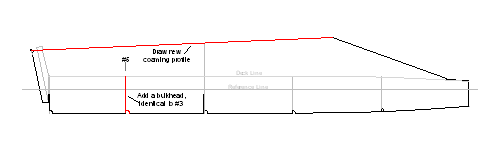
Draw the coaming on plywood just as was done with the bulkheads, including the reference line on both sides. Since the coaming is greater than eight feet long, you will have to scarf or butt join to get the required length. I used a simple butt joint on my boat, with the butt blocks on the inboard side.
Again, don't forget the limbers. These limbers allow water to drain towards the center of the boat.

Further assembly, including temporary pieces at stations two and three.
Before gluing all this together, level the coamings and make sure the bulkheads are square to the coamings. I also anchored the coamings to the sawhorses with steel angle brackets.

Use cleats (approx. 1"x1") to assemble the bulkheads to the coamings (and the stem to bulkhead #1). Fasten with screws and epoxy -- but do not glue the temporary pieces at two and three.
(Before assembly, cut holes in bulkheads, coamings and stem, as seen in photos later in these notes. The holes serve to lighten the boat a little, provide access into the hull for running wires and control cables, and also allow air circulation and drying of the areas under the deck.)

Also, use a piece of scrap to hold the stem at a right angle to bulkhead #1. This brace can be removed once the sheer clamps have been installed.
