|
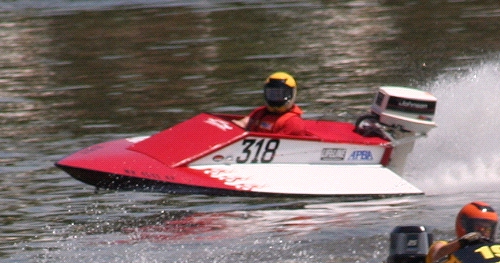
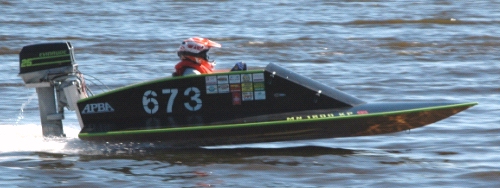
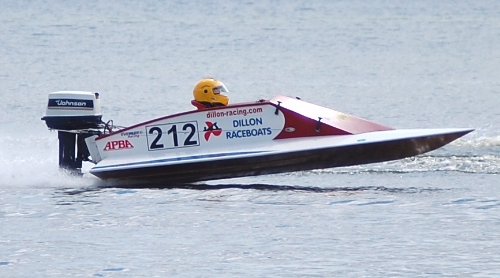
This 11' 11" long v-bottom boat was designed for racing in the APBA Sportsman classes called Mini GT and GT Pro. In fact, the Mini Vee is the ONLY homebuilt boat approved for racing in Mini GT. Both Mini GT and GT Pro are raced in Minnesota and surrounding states, in races organized by the Twin City Powerboat Association.
With a 35 hp Johnson or Evinrude motor, equipped with an off-the-shelf OMC propeller (somewhat modified), the Mini Vee has attained speeds near 47 mph. With a proper racing propeller (and no race-rules minimum weight requirement), I expect speeds can top 50 mph.
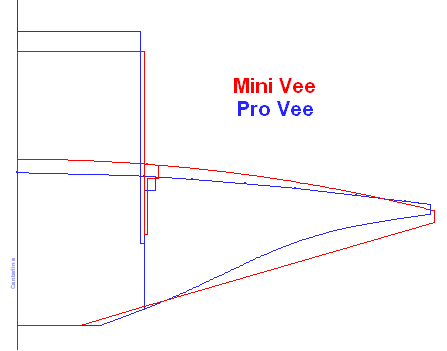
Furthermore, due to the Mini Vee's simple shape, it is easily stretched into a longer boat that should be able to carry larger motors, especially the smaller 3-cylinders, or motors in the 140-180 lb. range. I have recently added information about such changes to the Plans package and the Construction Notes.
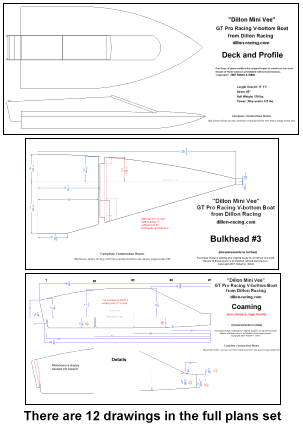
The Mini Vee offers two setback options; two coaming height options; and a choice of 18-inch wide or 20-inch wide cockpit. All options are included in the plans package.
The Dillon Mini Vee boat was designed with the 31.8 cubic inch Johnson or Evinrude in mind. This two-stroke, two-cylinder motor was manufactured in 20, 25, 30 and 35 horsepower versions from 1976 through 2005. It is the 30 and 35 horsepower models (they are actually identical) that are approved for racing in GT Pro, while the 25 horsepower version is used for Mini GT.
At its original length, I do not recommend using an engine that exceeds a weight of 130 lbs. The two cylinder, 30/35 hp OMC that we use for GT Pro racing is of course an excellent choice. The 25hp (or 30hp) Tohatsu that is used for racing in Europe and Australia should also work very well.
I tested my own Mini Vee with a 2-cylinder, 40hp Nissan (130 lbs.). I recorded 50 mph in a quick test with whatever prop I had on hand. Surely more speed is attainable as Sport C boats using this same motor race at nearly 60 mph.
Longer versions of the Mini Vee should be able to handle heavier motors, but I have not tested this hypothosis, so attempt it at your own risk.
See Customer-built Mini Vees
|